
SkinSeoul: Shop K-Beauty
SkinSeoulBeauty
4.06.00 Reviews
- Version
- 1.0.9
- Installs
- 10.00K
- Age Rating
- Everyone
Screenshots
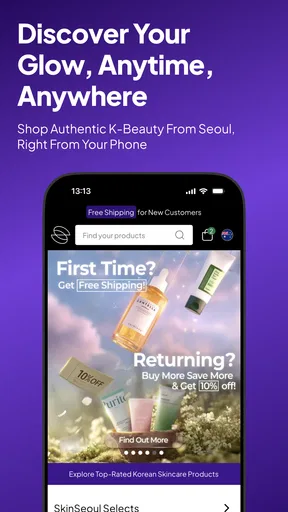
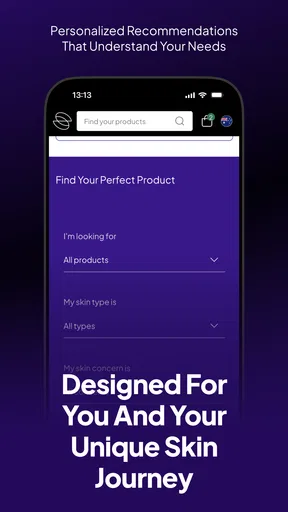
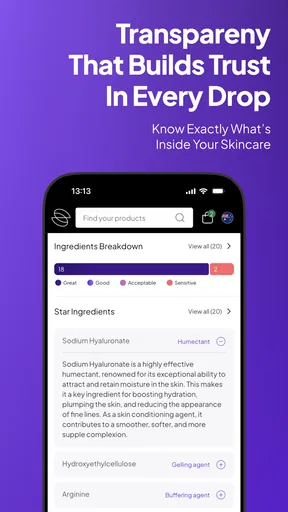
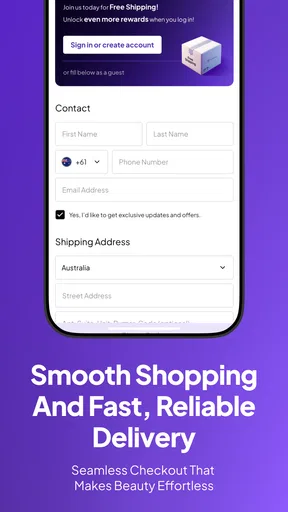
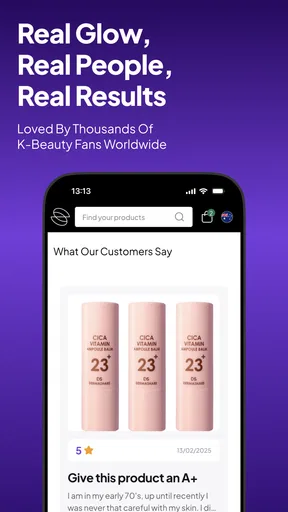
Our Review of SkinSeoul: Shop K-Beauty
 Analysis by Appyee
I approached SkinSeoul: Shop K-Beauty as a practical beauty-shopping app rather than treating it like a simple catalog. Developed by SkinSeoul, it is aimed at people who want a focused route into Korean beauty products and routines. The app is free, rated for Everyone, and its clear appeal is convenience: instead of beginning with a broad beauty marketplace, I can start from a K-Beauty-centered destination and decide whether that narrower focus suits the way I shop.
That focus matters because Korean skincare can feel overwhelming when every product appears to promise a different result. A dedicated app can make browsing feel more intentional, but it also creates a trade-off: the experience is most useful when I already have a general idea of what I need. If I am looking for a very specific ingredient, comparing several retailers, or seeking professional skin advice, a broader shopping tool or a dermatologist remains the better choice.
How SkinSeoul feels during everyday browsing
My first impression is that the app’s value depends less on dramatic extras and more on how quickly it helps me move from curiosity to a sensible shortlist. The store presents it as a destination for K-Beauty, and that positioning sets the right expectation. I would open it to explore Korean skincare, revisit products I am considering, or build a small routine without mixing the search with unrelated categories.
Perceived speed is especially important in a shopping app. People often browse in short gaps: while commuting, waiting for an appointment, or checking a product before placing an order. SkinSeoul is at its best in that kind of session, where I want to inspect a few options and leave with a clearer decision. I would not judge it by how many products it displays, but by whether each tap gets me closer to a useful choice without making me repeatedly restart my search.
There is also a practical benefit to keeping the app centered on one beauty culture. A general marketplace can be faster for familiar brands because I already know where everything is, but it can also bury K-Beauty products among unrelated listings. SkinSeoul gives the category a dedicated space, which makes it more appealing to someone building an interest in Korean routines rather than casually buying one isolated item.
At the same time, a focused catalog does not automatically remove decision fatigue. Korean beauty shopping still involves questions about skin type, texture, routine order, and whether a product fits an existing regimen. I would use the app as a discovery and shopping aid, not as a substitute for understanding what my skin actually tolerates.
What I would do in a normal shopping session
A realistic use case would be preparing for a simple evening routine. I might open the app after noticing that my cleanser is nearly finished, browse suitable replacements, and compare a few possibilities before buying. Rather than adding everything that looks interesting, I would create a short mental checklist: what step the product belongs to, whether I already own something similar, and whether introducing it would make my routine unnecessarily complicated.
This is where the app can be more useful than scrolling through social media recommendations. Social posts often encourage impulse purchases because the presentation is visual and enthusiastic. In SkinSeoul, I would try to slow down and treat each product as part of a routine. My most useful tip is to decide the missing step first, then browse. That small change prevents a shopping session from turning into a collection of attractive but redundant items.
I would also take screenshots or notes of products I am considering before making a final decision, especially if I am comparing several textures or routine roles. This is not a special feature claim; it is a workflow that makes a focused shopping app more manageable. It helps me separate “interesting” from “actually needed,” which is one of the biggest challenges in beauty shopping.
Where heavier use can become demanding
The app’s most demanding moments are likely to come during extended browsing rather than a quick product check. If I move through many listings, repeatedly open details, compare alternatives, and return to earlier pages, the experience has more opportunities to feel less immediate. That is normal for content-rich shopping, but it affects whether I would use the app for research lasting a long time.
For a short session, I would expect a modern beauty-shopping app to feel comfortable on a recent phone. On an older device, the experience may depend more heavily on available storage, memory, and connection quality. I would avoid opening it while many other demanding apps are active if I wanted the smoothest browsing session. Closing unused apps before a long product search is a simple way to reduce interruptions without changing how I shop.
Another heavy-use situation is switching rapidly between product pages and external research. I might want to check an ingredient, look at a routine guide elsewhere, then return to the app. That kind of multitasking is useful, but it can expose the difference between a quick shopping tool and a full research workspace. SkinSeoul is better suited to choosing and organizing a purchase than to replacing every source of skincare education.
Connection quality also shapes perceived performance. Shopping content generally depends on loading images and product information, so a weak connection can make any catalog feel slow. I would plan detailed browsing on a reliable network and save the app for quick checks when I am away from home. This is a realistic limitation for anyone who expects uninterrupted browsing in every location.
Stability and what recovery looks like
Reliability matters more to me in a shopping app than flashy presentation. If I have spent time comparing products, I want to return to the same decision without feeling that the session has been lost. My practical approach would be to make decisions in small stages: shortlist first, verify the routine role next, and only then move toward purchase. That workflow limits frustration if the app needs to reload or if I accidentally leave it.
I would also avoid treating an unfinished cart or open product page as my only record of a decision. Keeping a brief note of the product name and why I considered it gives me a recovery path if the app closes, the connection drops, or I need to return later. This is one of the less obvious habits that makes shopping apps easier to live with, particularly when the purchase involves several routine steps rather than one familiar item.
The app comes from SkinSeoul and is currently at version 1.0.7, so I would approach it as a relatively young product rather than assuming it has the same maturity as a long-established marketplace. That does not make it a poor choice, but it does influence my expectations. I would value clear navigation and dependable recovery more than a large number of ambitious extras. A focused app can become genuinely useful over time if its basic shopping flow remains steady.
If something interrupts a session, I would reopen the app, return to the category or product I was reviewing, and rebuild the shortlist from my notes. That sounds less convenient than continuing exactly where I stopped, but it is a sensible safeguard until I know how consistently the app preserves my place. For expensive or complicated purchases, I would never rely on memory alone.
Device fit, storage, and everyday constraints
SkinSeoul supports devices running Android 8.0 or later, which gives it a broad compatibility range for Android users. Still, compatibility is not the same as identical performance. A phone that meets the operating-system requirement may have limited memory, an older processor, or little free storage. Those factors can affect how quickly a catalog opens and how smoothly I move between image-heavy screens.
On a modest device, I would keep enough free storage for normal app operation and avoid running several large apps at once. I would also check whether the phone’s battery-saving mode is restricting background activity if the app behaves inconsistently after being left open. These are general device habits, but they are particularly relevant to shopping because a stalled page can make me abandon a purchase even when the product itself is appealing.
The free price makes trying it low-risk from a budget perspective. That does not mean every purchase discovered inside it will suit every budget, so I would still set a spending limit before browsing. This is another reason I prefer a shortlist workflow: it encourages deliberate shopping instead of turning the absence of an entry cost into permission to buy impulsively.
The Everyone age rating also makes the app broadly approachable for general browsing. I would still expect younger users to involve a parent or guardian when making purchases, and I would not interpret an age rating as skincare guidance. Sensitive skin, allergies, and active conditions require more care than a shopping interface can provide.
How it compares with familiar alternatives
Compared with a general online marketplace, SkinSeoul’s advantage is concentration. A broad retailer may offer more unrelated brands, faster comparison across categories, or a familiar checkout experience, but it can make K-Beauty discovery feel scattered. I would choose SkinSeoul when I want the shopping trip itself to stay centered on Korean beauty.
Compared with a brand-specific store, it should be more useful for exploring beyond one label. A brand store is convenient when I already know exactly what I want, especially if I am replenishing a favorite product. SkinSeoul makes more sense when I am still deciding which product or routine direction to investigate. The trade-off is that a specialized retailer may provide deeper information about its own range, while a destination covering K-Beauty has to serve a wider browsing purpose.
Compared with social media, the app is a better place for deliberate product research because it frames the experience around shopping rather than entertainment. Social platforms can be excellent for discovering trends and seeing how people use products, but they are also full of personal recommendations that may not translate to my skin. I would use social content for ideas and SkinSeoul for a more focused buying session, while treating both with healthy skepticism.
Compared with a skincare-tracking or ingredient-analysis app, SkinSeoul serves a different need. A tracker may help me record reactions and maintain consistency; an analysis tool may help me investigate formulas or ingredients. I would not expect a shopping destination to replace those functions. The strongest setup for a careful buyer may be using SkinSeoul to discover products, another method to check suitability, and personal notes to monitor how a new item fits the routine.
Who will get the most from it
I think the app is a good match for a beginner who wants a less distracting entry point into K-Beauty, as well as for an experienced shopper who already knows the kinds of products they enjoy and wants a dedicated place to browse. It may also suit someone preparing a gift, provided they understand the recipient’s preferences and do not assume that a popular routine works for everyone.
It is less suitable for someone who wants one universal recommendation with no research. Skincare is personal, and a catalog cannot know how my skin reacts, what I already use, or which ingredients I avoid. I would also skip it as my primary option if I need highly specialized medical skincare advice, extensive cross-retailer price comparison, or a very broad selection outside Korean beauty.
My best advice is to enter with a purpose. Choose a routine step, a product texture, or a specific shopping goal before opening the app. Then compare only a manageable number of candidates. This makes the focused catalog feel like an advantage instead of another source of endless browsing.
My performance verdict
SkinSeoul works best as a focused K-Beauty shopping companion: approachable, free to try, and more purposeful than a general marketplace when Korean beauty is the reason I am browsing. I appreciate the narrow identity because it gives a shopping session a clear direction. The app’s usefulness, however, depends on my willingness to make considered choices rather than treating it as an automatic skincare adviser.
From a performance perspective, I would keep expectations realistic. Quick browsing should be the natural use case, while long comparison sessions, weak connections, older hardware, and heavy multitasking can make any catalog feel less comfortable. The Android requirement begins at version 8.0, and the current version is 1.0.7, so I would keep the app updated and give it a fair test on my own device before making it part of a regular routine.
With over 10 thousand installs, it is still a relatively small destination compared with the biggest shopping platforms, but that can be part of its appeal: the experience is built around a clear beauty niche rather than trying to be everything at once. I would recommend it to readers who want a dedicated place to explore K-Beauty and who are comfortable doing their own suitability checks. I would not recommend relying on it alone for medical decisions or highly technical ingredient research.
My final take: SkinSeoul is worth trying when focused discovery matters more than having the widest possible marketplace. Use it with a shortlist, keep notes during longer sessions, and treat every product as one part of a personal routine rather than an instant solution. That approach brings out the app’s strongest quality: it can make K-Beauty shopping feel more organized without pretending that choosing skincare is ever completely automatic.
Privacy and Permissions
See what permissions an app requests and how it handles your data.
- Location
- approximate location (network-based)
- Photos/Media/Files
- read the contents of your USB storage, modify or delete the contents of your USB storage
- Storage
- read the contents of your USB storage, modify or delete the contents of your USB storage
- Camera
- take pictures and videos
- Microphone
- record audio
- Wi-Fi connection information
- view Wi-Fi connections
- Other
- view network connections, change network connectivity, full network access, run at startup, draw over other apps, control vibration, prevent device from sleeping, Google Play license check, read Google service configuration
Verdict
Strengths of SkinSeoul: Shop K-Beauty
- Curated selection of popular Korean skincare brands
- Product pages include ingredient and usage details
- Convenient browsing by skin concern and product type
- Regular promotions can make premium items more affordable
- Useful for discovering lesser-known K-beauty products
Limitations of SkinSeoul: Shop K-Beauty
- International shipping costs may vary significantly by destination
- Some products can sell out quickly due to limited stock
- Delivery times may be longer for overseas customers
- Not every product may include complete English information
- Returns can be less convenient for international orders
Similar Picks in This Category
View All
Beauty Makeup Editor & Camera
Photo & Video Editors - Instant Solution4.7

Perfect365: Face Makeup Editor
Perfect365, Inc.3.5

Mirror Plus - HD Mirror app
Digitalchemy, LLC4.8

Cute Lock Screen & Wallpapers
Prometheus Interactive LLC4.6

HD Camera for Android
One Music Player4.5

Phone Mirror app - True Mirror
Cards4.6
Frequently Asked Questions
What is SkinSeoul: Shop K-Beauty?
SkinSeoul: Shop K-Beauty is a shopping app focused on Korean skincare and beauty products. It lets users browse items such as cleansers, toners, serums, moisturizers, sunscreens, masks, and makeup from popular K-beauty brands. Product pages generally provide descriptions, ingredient information, usage guidance, and pricing, making it easier to compare products before placing an order.
Can I find products suitable for my skin type in SkinSeoul?
The app is designed to help shoppers explore products according to common skincare concerns and routines, including dryness, acne, sensitivity, dullness, and signs of aging. However, product filters and recommendations should be treated as general shopping guidance rather than medical advice. Users with allergies or sensitive skin should always read the full ingredient list and perform a patch test before regular use.
Does SkinSeoul: Shop K-Beauty deliver internationally?
Shipping availability depends on the destination country, the seller’s current delivery policy, and the products included in your basket. Before completing a purchase, check the shipping section for available regions, delivery estimates, fees, customs rules, and possible import taxes. International delivery times can vary considerably, so the final shipping information shown at checkout should be considered the most accurate.
Are the products sold through SkinSeoul authentic?
SkinSeoul presents itself as a specialist retailer for Korean beauty products and provides brand and product details to support informed shopping. Even so, customers should review product information, packaging images, expiry or batch details when available, and the store’s return policy before ordering. Buying through the official app or linked sales channel is preferable to using unverified third-party listings.
Is SkinSeoul: Shop K-Beauty free to download and use?
The app can generally be downloaded without an upfront charge, and browsing products does not usually require payment. Costs may apply when you purchase items, including product prices, shipping, taxes, or customs fees. Availability of the app, supported payment methods, promotions, and regional pricing may differ between Android and iOS, so review the checkout total before confirming an order.
